
Our PRODUCT
WE ARE SPECIALISED IN DEALING WITH ALL TYPE OF FERROUS & NON-FERROUS METALS
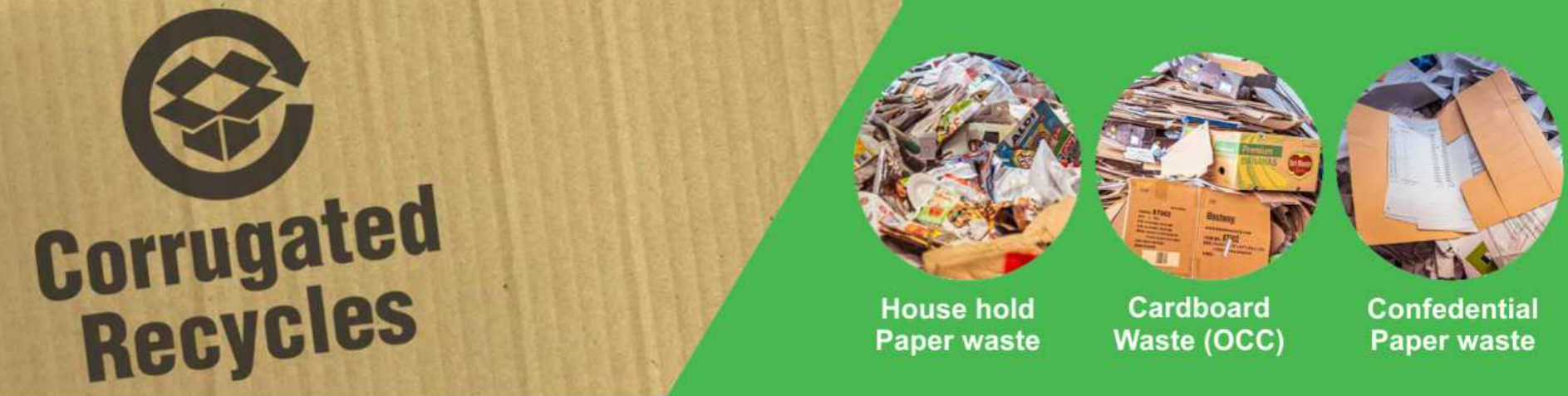
Old Corrugated Cardboard (OCC) WASTE
Post-use corrugated packaging material is commonly known as “cardboard”, while it is typically referred to as OCC or Old Corrugated Cardboard/ Containers to industry insiders. Very often, recycling and waste haulers use the term OCC in reference to cardboard. Corrugated cardboard can easily be recognized by its multiple layer structure; the fluted or wavy middle layer between sheets of paper keeps corrugated board light and gives it the strength to carry products.
Benefits of OCC Recycling
There are a number of benefits to recycling OCC instead of discarding it. Recycling OCC reduces energy and water usage while cutting the production of greenhouse gas and certain air pollutants like total reduced sulfur (TRS), volatile organic chemicals (VOCs), and hazardous air pollutants (HAP). The recycling cardboard also reduces the demand for virgin timber. It takes approximately three tons of trees to manufacture just one ton of virgin cardboard. Recycling helps reduce waste tipping fees as well. The recycling of one ton of cardboard saves more than nine cubic yards of landfill space.
Old Corrugated Cardboard Recycling Process
The recycling of corrugated containers is straightforward. It involves diverting old cardboard from the waste stream, the elimination of contaminants, and the flattening or compressing of material to promote ease of handling, storing, and transportation. The OCC material is delivered to a paper production mill or processor where it is processed into different paper products such as recycled paperboard, the center fluting of corrugated boxes, and as unbleached kraft paperboard.

yacht-club-1

marina-icon-light-1

marina-icon-light-5-1

marina-icon-light-7-1

marina-icon-light-3-1

COPPER
Copper is one of the most valuable non-ferrous metals. We can find it in electronics, wiring and cookware. Pure copper will look pink, while tarnished copper has a brown to reddish hue. If oxidized, the copper will turn green.
| 1. A BIRCH | 6. COPPER POWDER |
| 2. B BIRCH | 7. HOUSING WIRE |
| 3. T BIRCH | 8. HOUSING WIRE(DOUBLE) |
| 4. MILL BERRY | 9. COIL |
| 5. SMALL BERRY | 10. COPPER TANKI |
ALUMINIUM
This is one of the easiest non-ferrous metals to identify. It is what we see in soda cans and the metal itself is very lightweight and rust-resistant.
| 1. AWNING | 5. ALUMINIUM ENGINE |
| 2. AB | 6. ALUMINIUM WIRE |
| 3. ANGLE | 7.ALUMINIUM POWDER |
| 4. ALUMINIUM CAN | 8. SPORT RIM |
BRASS
This is typically found in decorative pieces, pipes, and musical instruments. It features a yellow-like colour . It is a copper alloy.
| BRASS POWDER |
| RED BRASS |
| NEW BRASS |
| BRASS TANKI |
STEEL
Stainless steel metal comes in several grades, ranging from #200 to #400. Certain varieties of stainless steel can be non-magnetic, such as #200, which is an iron alloy with nickel, manganese and chromium present.
| 202 |
| 316 |
| 304 |
| HIGH NICKEL |
LEAD
This is a very toxic, heavy metal. It is rarely found in consumer products today, but is still used to make bullets and certain pieces of medical equipment.
| LEAD POWDER |
| LEAD |
| SMALL BATERY |
| WATER BATERY |
| DRY BATERY |